blog post
Client feedback by case phase: when to ask PI clients

Read Time

November 24, 2026
Most firms ask clients for feedback once, at the end. The settlement check has cleared, the client is relieved, the score comes back high, and the review link goes out. The firm learns almost nothing about the year before.
When should a personal injury firm ask clients for feedback? Ask a short question at a few fixed points during the case, read the answers by phase and by case manager, and call every client who gives a low score.
Why the end-of-case survey tells you so little
After the payout, a satisfaction score mostly measures the payout. The problems that shape a client's experience happened months earlier: a text that sat unanswered during treatment, a long silence while the demand was out. By the time the case closes, none of it can be fixed.
The client who was frustrated in month four usually just wanted to know what was happening. Nobody asked.
Where to ask during the case
Pick the moments when frustration tends to build, and ask the same thing every time. One rating question and one open question are enough.
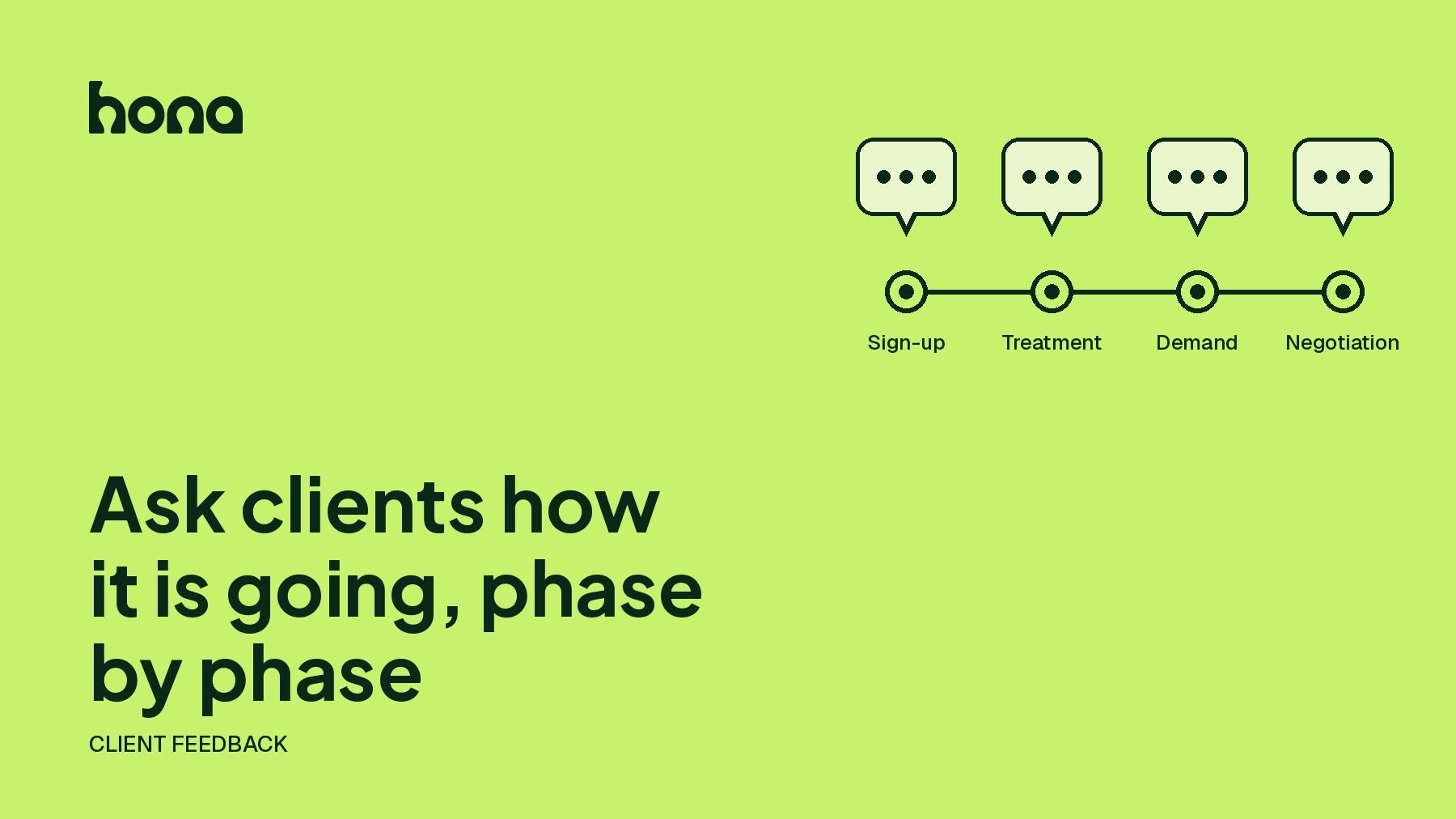
- After sign-up. Does the client understand what happens next and who to contact?
- During treatment. This is the longest stretch of most cases, and the easiest place for a client to feel forgotten.
- While the demand is out. Clients hear little while your firm waits on records and the insurer, so a check here catches frustration early.
- During long negotiations. This is where repeat "where's my case?" calls start.
Read the answers by phase and by person
A firm-wide average hides the problem. Break the results down by phase, case manager, office, and language.
- Low scores in one phase. Point to a process gap, such as no updates during a stretch where nothing visible happens.
- Low scores under one case manager. Usually mean too many cases, not a bad employee.
- The same comment again and again. "Nobody calls me back" tells you the fix in the client's own words.
Then close the loop. Give one person the job of calling every low score within two business days. Label the comment box clearly as private feedback, too. Some clients assume it is a public review.
Where Hona fits
Hona can send review requests during every case, and Hona Forms, like a client satisfaction survey, can go out automatically when a case changes phase. Read more on getting more reviews for your firm. With the Hona MCP Server, your team can ask Claude or ChatGPT how scores are trending by phase or by case manager.
Slow replies are a common thread in low scores. Lia, your case liaison, answers routine client texts from your firm's FAQs, replies when a client texts after hours, and hands your team anything that needs a person, with the reason attached.
The takeaway
Ask during the case, not only at the end. Read the answers by phase and by case manager, and call every unhappy client. Want to see client feedback by phase across your cases? Book a demo.
Most firms ask clients for feedback once, at the end. The settlement check has cleared, the client is relieved, the score comes back high, and the review link goes out. The firm learns almost nothing about the year before.
When should a personal injury firm ask clients for feedback? Ask a short question at a few fixed points during the case, read the answers by phase and by case manager, and call every client who gives a low score.
Why the end-of-case survey tells you so little
After the payout, a satisfaction score mostly measures the payout. The problems that shape a client's experience happened months earlier: a text that sat unanswered during treatment, a long silence while the demand was out. By the time the case closes, none of it can be fixed.
The client who was frustrated in month four usually just wanted to know what was happening. Nobody asked.
Where to ask during the case
Pick the moments when frustration tends to build, and ask the same thing every time. One rating question and one open question are enough.
- After sign-up. Does the client understand what happens next and who to contact?
- During treatment. This is the longest stretch of most cases, and the easiest place for a client to feel forgotten.
- While the demand is out. Clients hear little while your firm waits on records and the insurer, so a check here catches frustration early.
- During long negotiations. This is where repeat "where's my case?" calls start.
Read the answers by phase and by person
A firm-wide average hides the problem. Break the results down by phase, case manager, office, and language.
- Low scores in one phase. Point to a process gap, such as no updates during a stretch where nothing visible happens.
- Low scores under one case manager. Usually mean too many cases, not a bad employee.
- The same comment again and again. "Nobody calls me back" tells you the fix in the client's own words.
Then close the loop. Give one person the job of calling every low score within two business days. Label the comment box clearly as private feedback, too. Some clients assume it is a public review.
Where Hona fits
Hona can send review requests during every case, and Hona Forms, like a client satisfaction survey, can go out automatically when a case changes phase. Read more on getting more reviews for your firm. With the Hona MCP Server, your team can ask Claude or ChatGPT how scores are trending by phase or by case manager.
Slow replies are a common thread in low scores. Lia, your case liaison, answers routine client texts from your firm's FAQs, replies when a client texts after hours, and hands your team anything that needs a person, with the reason attached.
The takeaway
Ask during the case, not only at the end. Read the answers by phase and by case manager, and call every unhappy client. Want to see client feedback by phase across your cases? Book a demo.