Case managers can't keep up with 100+ active clients. Hona's AI agent, Lia, handles all outreach, tracks every appointment, and only escalates when a human actually needs to step in.


Every missed appointment, unreported symptom, and untracked provider visit is money off the settlement. Here's what the data says.
Reduction in case payouts when there's a gap in treatment.
Of cases have a 2-week treatment gap in the first 6 weeks.
Missed appointments happen because the client simply forgot.
Here's what happens from the moment you flip the switch.
When a client reaches the treatment phase, enroll them from your dashboard without leaving your case management system. No setup call, no intake form for your team to fill out.
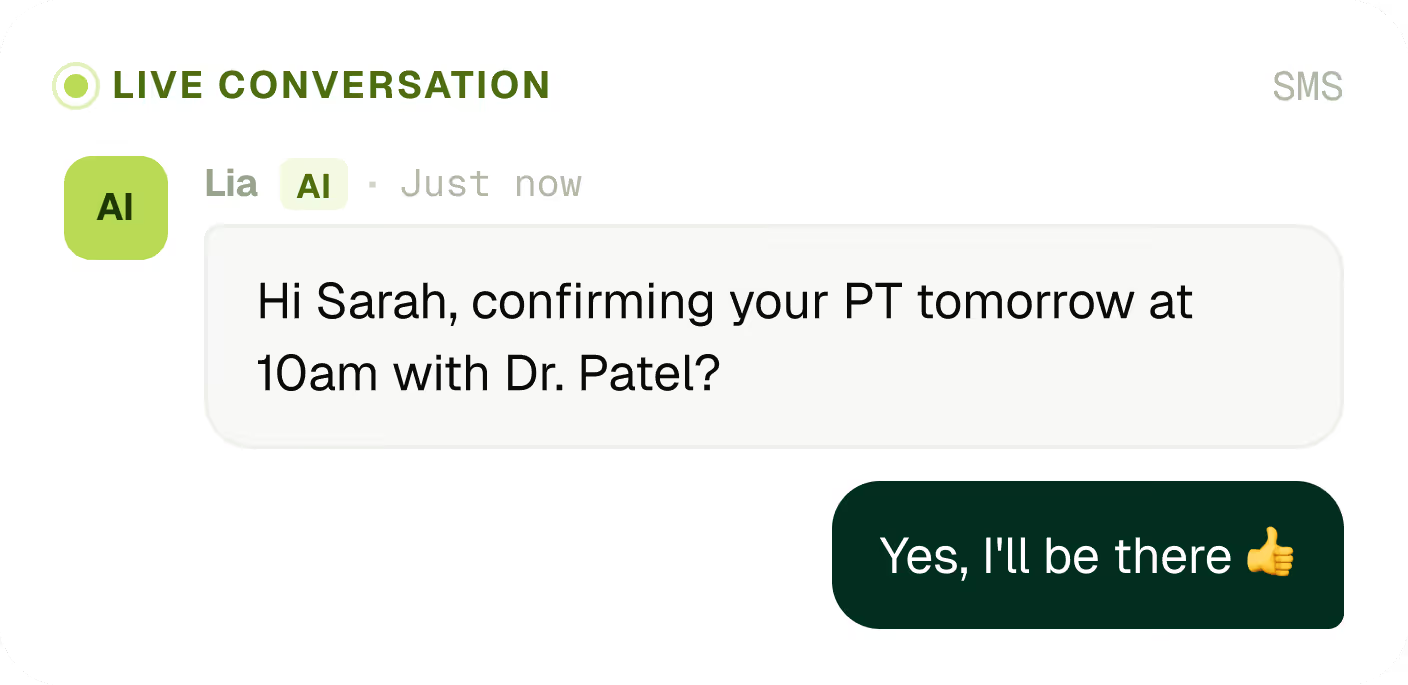
Within minutes of enrollment, she reaches out by text to start mapping the client's treatment. Next appointment, time, location, provider.
.png)
She sends appointment reminders, follows up after each visit, and asks the questions that matter: Did you make it? How did it go? Any new symptoms?
.avif)
Missed PT twice in a row. New symptom reported. Provider unreachable. No response for 48 hours. The issues that quietly erode case value get flagged before they compound.
.avif)
When an escalation fires, a case manager takes over. Call directly from the dashboard — the call transcript feeds back into Lia so the next conversation picks up where yours left off.
.avif)
Some clients reply in thirty seconds. Others take a few days. She adapts.
Every check-in, reminder, and follow-up handled by text — no manual sending, no dropped balls.
The system learns and adjusts automatically.
Outreach only happens when it's welcome.

Your case file writes itself.
Every appointment captured and timestamped.
Complete provider list builds itself as she goes.
Flagged immediately, with the reason captured.
All searchable, all attached to the case.
.avif)
You define the rules. She enforces them.
Set the rules once. The system catches issues while there's still time to act.
High-priority issues re-ping case managers every hour until resolved.
What happened, when, what she tried, what the client said.
.png)
She handles the manual work. Your team handles the judgment calls.
Every conversation she has is visible to your team.
Nothing goes in without a human sign-off.
Recorded, transcribed, fed back to Lia.
Each case manager sees their own book.
.avif)
Here's what happens from the moment you flip the switch.
No rip-and-replace. Lia lives alongside your case management system and pulls data both ways.


Client data is handled the way it should be. Full documentation available on request.
PHI handled per BAA, end-to-end encryption.
Consent tracked per outreach, opt-out honored.
Type II audited annually. Report on request.
Lia can reach clients by text or call, and your firm controls how she's configured. Many firms opt for text-based outreach because clients tend to respond faster and find it less intrusive. Your configuration settings determine how she makes first contact and how she follows up from there.
Lia handles the repetitive middle of a personal injury case: appointment reminders, post-visit check-ins, treatment gap follow-ups, and provider tracking. She manages routine treatment-phase communication on her own. Humans step in when something needs judgment. If a client mentions they want to stop treatment, flags a new provider, or asks a legal question, she escalates that immediately to the assigned case manager.
Clients can be enrolled manually through the Chrome extension. Depending on your setup, enrollment can also be connected to case status changes in your case management system. Most firms start with manual enrollment to get comfortable with the product first. Your onboarding team can help you figure out the right workflow for how your firm operates.
Lia works with the PI case management workflows Hona already supports. She connects through existing Hona integrations and a Chrome extension that gives her access to the case context she needs. Talk to your rep about your specific CMS to confirm what's supported and how the connection works for your setup.
Yes, and that's by design. She introduces herself as Lia from your firm in the very first message. Full transparency is a requirement. One best practice we see from firms: have the case manager send a quick intro text or call the client before she begins outreach. It sets expectations and makes her first message feel like a natural handoff instead of a surprise.
A lot is configurable. You can adjust the intro message, reminder guidance, post-treatment prompts, check-in frequency, the coordinator's name, escalation rules, and contact preferences. It's done through plain-language instructions, similar to how you'd describe a task to a person. Most firms tune the defaults once they see how their clients respond. Those defaults are a starting point, not a mandate.
You define the rules. Escalations are triggered by conditions you write in plain language, for example: 'Alert me if a client mentions they want to stop treatment' or 'Flag any new provider that isn't on our preferred list.' When a trigger is hit, the assigned case manager gets an alert so they can follow up directly. One tip from early adopters: start with fewer escalation rules and add more over time. Too many rules at once can create noise. Tighter rules mean more actionable alerts.
Enrollment is completely optional per client. Most firms start by focusing on their active-treatment, soft-tissue cases and excluding cases where the client is unlikely to respond well to text outreach, such as elderly clients or catastrophic injury cases. You stay in control of who gets enrolled.
Lia tracks provider activity as part of case monitoring. She asks clients about their treatment providers and flags unexpected or unfamiliar situations for case manager review. Talk to your rep about how provider management is configured for your firm and what level of detail gets surfaced in escalations.
Yes, that guardrail is built in. Lia is configured to never provide legal advice or legal opinions. Any question that touches legal strategy gets escalated directly to the assigned case manager. She stays in her lane.
Yes. Lia supports Spanish-language conversations. If a client texts in Spanish, she responds in Spanish. Talk to your onboarding team about how to set this up correctly for your firm's specific caseload.
It can, if you don't account for it. If you have existing Hona automations tied to the treatment phase, it's worth mapping those out before you go live with Lia. Your onboarding team will help you configure things so clients aren't getting overlapping outreach from multiple sources.
Pricing for Lia is separate from Hona's core platform. Your rep can walk you through how it's structured, what billing options are available, and how other firms are handling it on their end.
Contract and commitment terms for Lia are separate from Hona's core platform. Talk to your rep about how it's structured and what flexibility looks like for your firm.