The treatment phase is where PI cases quietly lose value
PI case managers lose hours chasing clients through treatment, and the gaps show up later in case value. See how Hona's AI Care Coordinator keeps clients in care.
The Hona Blog
Explore the Latest Trends, Tips, and Strategies in Legal Tech and Client Communication


PI case managers lose hours chasing clients through treatment, and the gaps show up later in case value. See how Hona's AI Care Coordinator keeps clients in care.
Ask a personal injury case manager where their day goes and you will hear the same answer. Chasing clients through treatment. Confirming appointments. Following up on the ones who went quiet. It is some of the most important work in the case, and it is also some of the most repetitive.
That repetition carries a cost that does not show up until much later. When a client misses appointments or drifts out of treatment, the gap lands in the demand months down the road, when it is too late to fix. Gaps in care become gaps in case value. Most firms already know this. The hard part is staying on top of it across a full caseload without burning out the people doing the follow-up.
Rooney Agramonte, a case manager at Voto & Cavalli, described the before state plainly:
"Following up with clients was one of the most time-consuming things we did. The AI Care Coordinator is easing the pain. I think it's something we want to keep."
The treatment phase is long, and it moves at the client's pace, not the firm's. A single client might see a chiropractor, a pain management specialist, and an orthopedist over several months. Every visit matters to the case. Every missed visit is a small hole in the eventual demand.
The work is hard to keep up with for a few reasons:
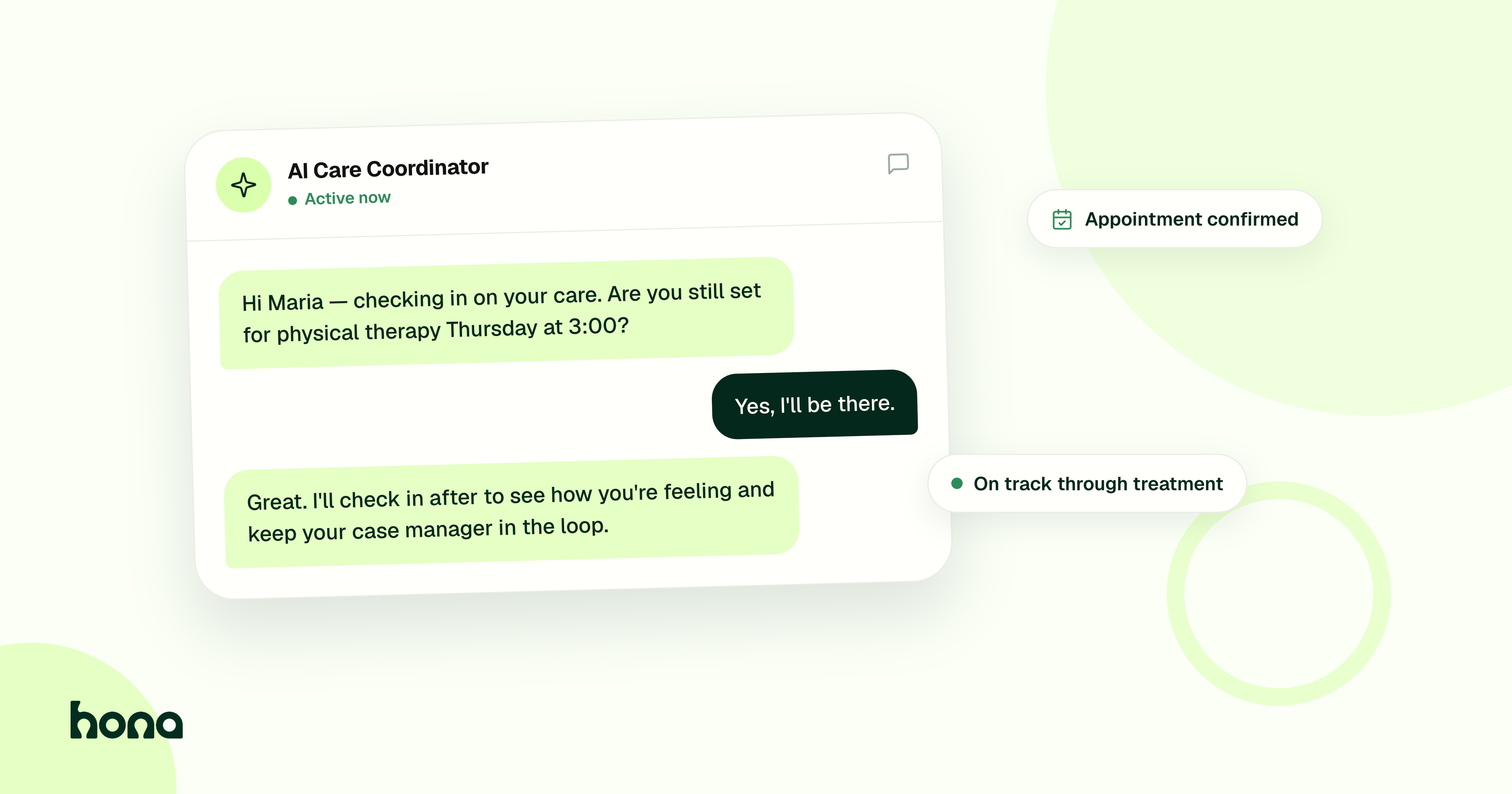
Hona's AI Care Coordinator handles the medical touchpoints a case manager would otherwise chase by hand. It works through text, the way clients already prefer to communicate, and it runs in the background across every active case.
The piece that sets it apart is that it is interactive. One-way reminder automations fall over the moment a client replies with a real question or a change in their situation, and a client who is actively treating will do exactly that. The AI Care Coordinator responds, follows up after appointments, and notices when a new provider enters the picture.
Higher appointment attendance and fewer treatment gaps mean a cleaner, more complete picture by the time the case reaches demand. The details that drive value get captured while the case is active, instead of being reconstructed after the fact. Your firm shifts from reactive, finding out about a problem after it happened, to proactive, catching it while there is still time to act.
The human side does not get lost either. The coordinator takes the repetitive work off your case managers so they can spend their attention on the clients who need a real conversation, not another reminder text.
The treatment phase is where personal injury cases quietly gain or lose value. Giving it consistent attention used to mean hiring more people or accepting that some follow-up would slip. That tradeoff is no longer the only option.
Want to see what the treatment phase looks like when the follow-up runs itself? Book a demo.
Don’t miss out on valuable content that can revolutionize your law firm.

Whether you choose to create online courses or become a trusted advisor for businesses, the end result is greater impact—and a more diverse stream of income.
Many attorneys focus on client billing as their primary income stream, but there are other ways to turn legal knowledge into profitable opportunities. Whether it’s writing books as a lawyer, producing educational content, or offering specialized guidance, several avenues exist for monetizing legal expertise beyond traditional practice. Below are key ideas on how to explore this potential.
Attorneys often have deep insights into areas such as personal injury, corporate law, or real estate transactions. Turning that expertise into a published resource can serve multiple goals:
Consider focusing on a niche where you have extensive experience. Shorter, practical guides tend to resonate well with readers looking for straightforward answers to common legal issues.
Editing for clarity and working with a professional publisher or self-publishing platform can boost the book’s credibility.
Sharing expert knowledge through digital platforms is another way to earn revenue while helping others. Many potential learners—entrepreneurs, fellow attorneys, students—seek simplified explanations of complex legal topics.
By developing structured modules, interactive elements, and downloadable materials, attorneys can provide significant value in an accessible format.
Starting small with a short pilot course offers a chance to refine content and gather feedback. Platforms like Teachable, Thinkific, or Kajabi simplify the technical side, so attorneys can concentrate on the material itself. Watching how learners interact with content is a great way to refine future offerings.
Attorneys who have developed specialized skills—such as negotiating contracts or navigating regulatory frameworks—can advise organizations or individuals on a case-by-case basis. This form of consulting often involves:
Consulting engagements can be billed hourly, by project, or through retainers.
Setting clear expectations around scope, timeline, and deliverables helps both parties get the most out of this arrangement.
These strategies can work in tandem. An attorney might begin by writing books as a lawyer, then repurpose chapters into course modules, and ultimately accept speaking or consulting engagements based on the subject matter. Each approach reinforces the other, creating a cumulative effect that increases visibility and revenue.
Lawyers have unique skills that stretch beyond face-to-face representation. By exploring new ways to deliver knowledge, it’s possible to build a multi-faceted career that reaches a broader audience.
Whether you choose to create online courses or become a trusted advisor for businesses, the end result is greater impact—and a more diverse stream of income.

Shifting from working in your firm to working on it involves building a sturdy framework for success.
Attorneys often find themselves immersed in daily tasks that overshadow broader goals. Shifting focus from routine operations to long-term planning is key to law firm business development, scaling a law firm, and learning how to grow a law firm. Below are ways outlining effective strategies for making this transition:
Shifting from working in your firm to working on it involves building a sturdy framework for success. By delegating routine duties, optimizing processes, and elevating strategic priorities, you’ll create a practice ready for sustained growth.

Many practices encounter the same set of challenges.
Many practices encounter the same set of challenges. Solutions that work for one office can support a wider group of legal professionals. By shaping these solutions into offerings, law firms open new revenue channels.
This might involve creating legal templates for lawyers, designing legal products for lawyers, or building legal tools for law firms that increase efficiency.
Recognizing patterns makes it easier to see where a new service or product would help peers.
By packaging reliable templates, attorneys help colleagues handle tasks faster, saving time and resources.
Many offices would value a centralized resource that improves organization and reduces errors.
By pairing a product with expert guidance, creators build trust and form stronger professional relationships.
Consistent outreach helps attorneys realize the impact of these resources and boosts adoption.
Growing beyond client billing involves finding new ways to assist other lawyers. By identifying common headaches, drafting templates, and delivering specialized tools, firms can create practical solutions that simplify operations across the profession.
This approach benefits both the creators, who earn additional revenue, and the users, who gain time-saving assets.

When it comes to client reviews for lawyers, consistency and quality service are key.
The legal field is highly competitive, and social proof can help your practice stand out.
Many people research online feedback before deciding on representation. Strong client reviews for lawyers can strengthen your credibility and lead to a steady flow of new cases. Below is a structured approach to securing and leveraging reviews for lawyers in your firm.
Prioritize collecting honest opinions from satisfied clients to enhance your online reputation.
A strong foundation of service makes clients more willing to share favorable experiences.
Lower the barrier to entry so more clients follow through with their feedback.
Diversify your online presence to reach clients wherever they feel most comfortable sharing feedback.
Reinforce your firm’s reputation by strategically showcasing the best client praise.
A measured approach to unfavorable feedback demonstrates accountability and a client-focused mindset.
Make gathering reviews a routine activity rather than an occasional push.
When it comes to client reviews for lawyers, consistency and quality service are key. Clear communication, streamlined requests, and a focus on reputable online sources can yield powerful testimonials. This social proof builds confidence, sets you apart from competitors, and brings new opportunities to your law firm.

Clear communication fosters a solid foundation for lasting client relationships.
Retaining existing clients often hinges on how well a firm conveys information. Straightforward messaging reduces confusion, sets expectations, and encourages trust. When clients understand what is happening and why, they are less inclined to seek out alternatives.
Clients gravitate toward businesses that share details openly. Confidence grows when updates, reasoning, and expected outcomes are communicated in a simple manner. This creates an environment where clients feel included, respected, and more likely to remain loyal.
Clients value knowing what to anticipate. Outlining timelines, processes, and next steps in clear terms prevents misunderstandings. When all parties start on the same page, there is less frustration and a greater chance that clients will continue to rely on the firm’s services.
Complex phrases or industry jargon can lead clients astray. Replacing them with direct, plain language guides clients along the intended path. Fewer misinterpretations mean fewer wasted hours clarifying points and more time spent delivering quality service.
Clients who understand how to communicate concerns are more inclined to speak up before issues escalate. A welcoming tone and a clear invitation to share thoughts create a channel that identifies minor problems early. Addressing these concerns promptly helps maintain positive relationships.
Clients who feel informed and supported often share their experiences with peers. Word-of-mouth endorsements stem from clear, timely, and honest exchanges. Over time, these favorable impressions attract more clients, reinforcing the firm’s standing in the market.
Streamlined messaging prevents confusion from turning into drawn-out problems. Teams spend less time clarifying points and more time advancing client matters. This effective allocation of energy supports a positive client experience, further increasing retention.
Clear communication fosters a solid foundation for lasting client relationships. Straightforward exchanges build trust, prevent misunderstandings, and encourage continuous engagement. By adopting this approach, firms gain a stable base of satisfied clients who value the clarity they receive.

A thoughtful strategy, supported by careful organization and reliable technology, positions a firm to manage large caseloads effectively.
Handling a heavy caseload in complex litigation calls for structured methods, clear communication, and reliable technology. Without proper organization, valuable time drifts away in tracking down documents, sorting through data, and juggling deadlines. Consider these approaches to bring order to intricate legal matters.
A single, secure hub for files, schedules, and correspondence prevents confusion. By placing all necessary resources in one location, teams can:
This central point of reference eases collaboration across various roles and departments.
Large caseloads often include multiple filings, negotiations, and meetings. Establishing a clear hierarchy of tasks avoids last-minute scrambles and missed deadlines. Consider:
A systematic approach reduces the risk of costly setbacks.
Modern software handles repetitive steps that once demanded manual effort. With the right tools, teams can automate certain processes, gather data in structured formats, and share information more smoothly. Technology also supports consistent communication, keeping clients and internal staff aligned. When each participant sees the same data, everyone moves forward with the same understanding.
Large caseloads require steady interaction between attorneys, paralegals, clerks, and clients. Direct communication channels within one platform encourage clarity. Consider:
This steady flow of information eliminates guesswork.
No single attorney can handle every detail of a large caseload. Delegating tasks to capable team members spreads the workload. Clear assignments, deadlines, and checkpoints keep everyone accountable. Senior attorneys can review progress at set intervals, offering guidance without micromanaging. A balanced delegation strategy strengthens efficiency and prevents burnout.
Caseloads evolve. A method that worked last quarter may not suit the current volume or complexity. Periodic reviews highlight areas needing improvement. Questions to consider:
Adjusting workflows ensures that the firm adapts to changing demands, improving speed and quality.
Even the best tools falter if the team lacks proper training. Workshops, short video tutorials, or quick reference guides help employees gain confidence with new platforms and methods. The time spent learning pays off when tasks proceed smoothly.
With many cases unfolding at once, the risk of errors increases. Setting quality checkpoints, such as periodic file reviews or brief team check-ins, ensures that standards remain high. Correcting small issues early prevents them from escalating into major problems that waste time and resources.
Clients often find complex litigation stressful and confusing. Keeping them informed through clear messaging and a dedicated portal reduces the volume of calls asking for status updates. By preemptively sharing progress reports and next steps, the firm eases client concerns and smooths the path toward resolution.
Collecting data on how long tasks take, where delays occur, and which strategies yield better outcomes guides continuous improvement. Over time, insights drawn from these metrics help firms refine their approach. Small changes to processes can have a big impact on overall efficiency.
A thoughtful strategy, supported by careful organization and reliable technology, positions a firm to manage large caseloads effectively. Better workflows, open communication, and team collaboration allow attorneys to guide complex litigation toward successful conclusions without unnecessary strain.