blog post
The treatment phase is where PI cases quietly lose value

Read Time

July 7, 2026
Ask a personal injury case manager where their day goes and you will hear the same answer. Chasing clients through treatment. Confirming appointments. Following up on the ones who went quiet. It is some of the most important work in the case, and it is also some of the most repetitive.
That repetition carries a cost that does not show up until much later. When a client misses appointments or drifts out of treatment, the gap lands in the demand months down the road, when it is too late to fix. Gaps in care become gaps in case value. Most firms already know this. The hard part is staying on top of it across a full caseload without burning out the people doing the follow-up.
Rooney Agramonte, a case manager at Voto & Cavalli, described the before state plainly:
"Following up with clients was one of the most time-consuming things we did. The AI Care Coordinator is easing the pain. I think it's something we want to keep."
Why the treatment phase is so hard to manage
The treatment phase is long, and it moves at the client's pace, not the firm's. A single client might see a chiropractor, a pain management specialist, and an orthopedist over several months. Every visit matters to the case. Every missed visit is a small hole in the eventual demand.
The work is hard to keep up with for a few reasons:
- It is constant. Reminders, confirmations, and check-ins never really stop while a client is treating.
- It is easy to deprioritize. When something urgent lands, routine follow-up is the first thing to slip.
- It stays invisible until it isn't. A client who quietly stopped treating six weeks ago is a problem you discover at the worst possible moment.
What the AI Care Coordinator actually does
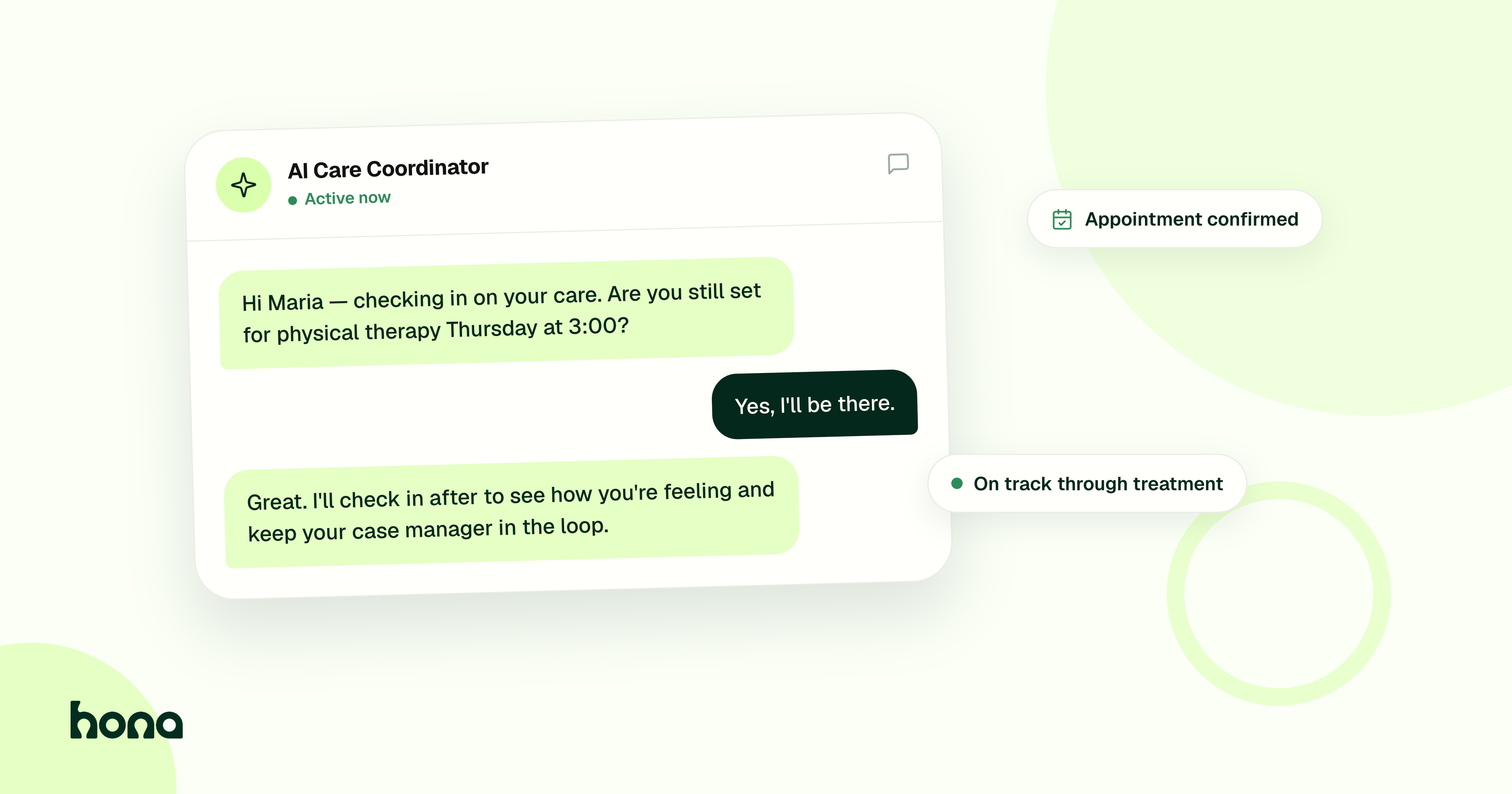
Hona's AI Care Coordinator handles the medical touchpoints a case manager would otherwise chase by hand. It works through text, the way clients already prefer to communicate, and it runs in the background across every active case.
- Keeps clients moving through treatment with timely, personal check-ins instead of generic blasts.
- Confirms upcoming appointments and catches the ones that get missed, so a skipped visit gets addressed in days rather than discovered in months.
- Tracks where each client is in their care, including the providers they are seeing.
- Escalates to your team the moment something needs a human, so case managers spend their time on the conversations that matter.
The piece that sets it apart is that it is interactive. One-way reminder automations fall over the moment a client replies with a real question or a change in their situation, and a client who is actively treating will do exactly that. The AI Care Coordinator responds, follows up after appointments, and notices when a new provider enters the picture.
Why this protects case value
Higher appointment attendance and fewer treatment gaps mean a cleaner, more complete picture by the time the case reaches demand. The details that drive value get captured while the case is active, instead of being reconstructed after the fact. Your firm shifts from reactive, finding out about a problem after it happened, to proactive, catching it while there is still time to act.
The human side does not get lost either. The coordinator takes the repetitive work off your case managers so they can spend their attention on the clients who need a real conversation, not another reminder text.
The takeaway
The treatment phase is where personal injury cases quietly gain or lose value. Giving it consistent attention used to mean hiring more people or accepting that some follow-up would slip. That tradeoff is no longer the only option.
Want to see what the treatment phase looks like when the follow-up runs itself? Book a demo.
Ask a personal injury case manager where their day goes and you will hear the same answer. Chasing clients through treatment. Confirming appointments. Following up on the ones who went quiet. It is some of the most important work in the case, and it is also some of the most repetitive.
That repetition carries a cost that does not show up until much later. When a client misses appointments or drifts out of treatment, the gap lands in the demand months down the road, when it is too late to fix. Gaps in care become gaps in case value. Most firms already know this. The hard part is staying on top of it across a full caseload without burning out the people doing the follow-up.
Rooney Agramonte, a case manager at Voto & Cavalli, described the before state plainly:
"Following up with clients was one of the most time-consuming things we did. The AI Care Coordinator is easing the pain. I think it's something we want to keep."
Why the treatment phase is so hard to manage
The treatment phase is long, and it moves at the client's pace, not the firm's. A single client might see a chiropractor, a pain management specialist, and an orthopedist over several months. Every visit matters to the case. Every missed visit is a small hole in the eventual demand.
The work is hard to keep up with for a few reasons:
- It is constant. Reminders, confirmations, and check-ins never really stop while a client is treating.
- It is easy to deprioritize. When something urgent lands, routine follow-up is the first thing to slip.
- It stays invisible until it isn't. A client who quietly stopped treating six weeks ago is a problem you discover at the worst possible moment.
What the AI Care Coordinator actually does
Hona's AI Care Coordinator handles the medical touchpoints a case manager would otherwise chase by hand. It works through text, the way clients already prefer to communicate, and it runs in the background across every active case.
- Keeps clients moving through treatment with timely, personal check-ins instead of generic blasts.
- Confirms upcoming appointments and catches the ones that get missed, so a skipped visit gets addressed in days rather than discovered in months.
- Tracks where each client is in their care, including the providers they are seeing.
- Escalates to your team the moment something needs a human, so case managers spend their time on the conversations that matter.
The piece that sets it apart is that it is interactive. One-way reminder automations fall over the moment a client replies with a real question or a change in their situation, and a client who is actively treating will do exactly that. The AI Care Coordinator responds, follows up after appointments, and notices when a new provider enters the picture.
Why this protects case value
Higher appointment attendance and fewer treatment gaps mean a cleaner, more complete picture by the time the case reaches demand. The details that drive value get captured while the case is active, instead of being reconstructed after the fact. Your firm shifts from reactive, finding out about a problem after it happened, to proactive, catching it while there is still time to act.
The human side does not get lost either. The coordinator takes the repetitive work off your case managers so they can spend their attention on the clients who need a real conversation, not another reminder text.
The takeaway
The treatment phase is where personal injury cases quietly gain or lose value. Giving it consistent attention used to mean hiring more people or accepting that some follow-up would slip. That tradeoff is no longer the only option.
Want to see what the treatment phase looks like when the follow-up runs itself? Book a demo.